The Human in the Loop Is Also the Weakest Link
The human in the loop is both the vulnerability and the safeguard. Human error may be inevitable, but institutional fragility is a design choice.

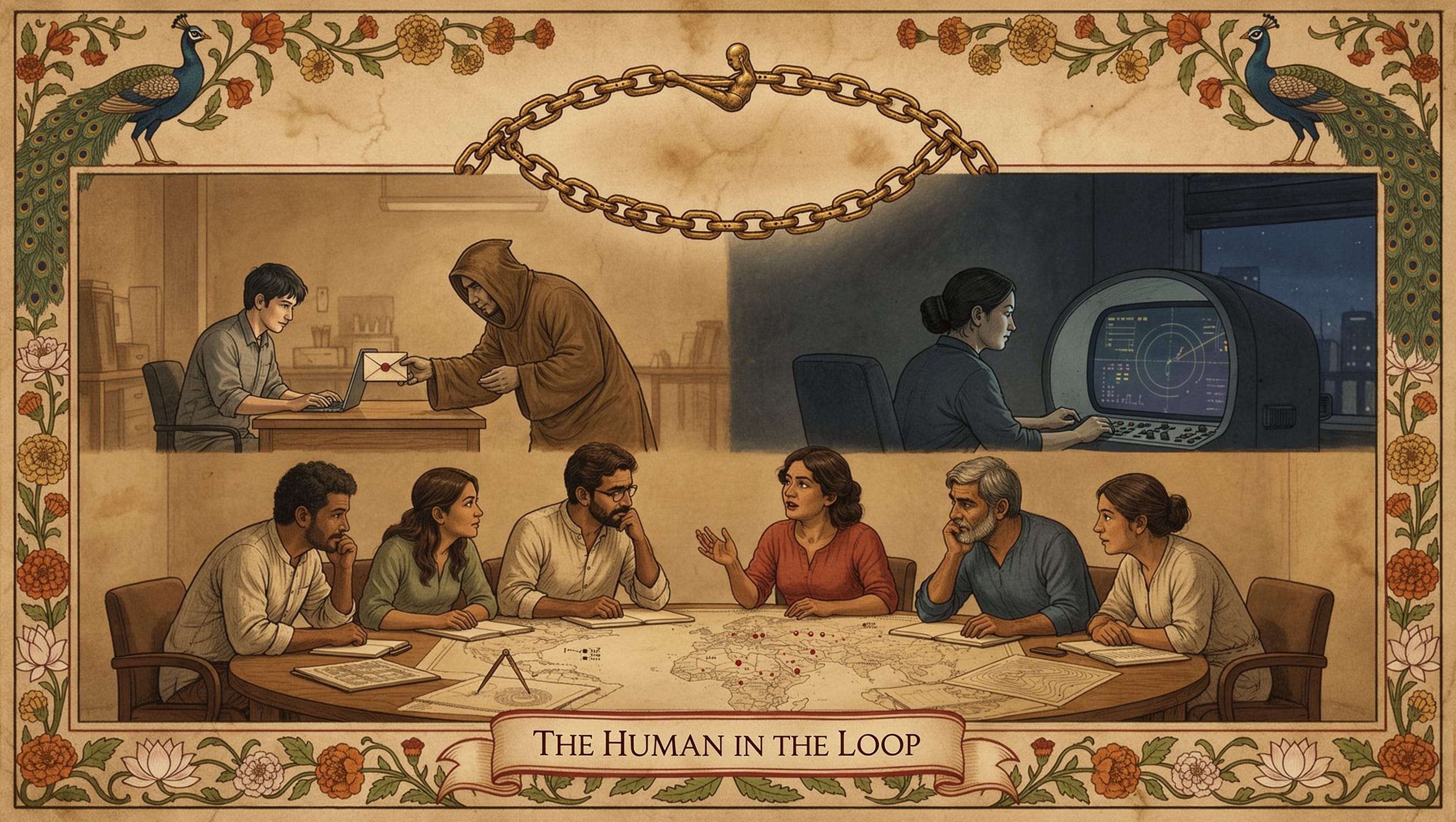
Quick glance
Humans have spent the past four years, since ChatGPT heralded the AI revolution, worrying about how it might end; we considered almost every apocalypse, except an embarrassingly familiar one.
On Thursday, Jensen Huang resigned as CEO of Nvidia, the company he founded and made indispensable to the AI revolution.
On October 29, the cryptocurrency exchange Binance suffered an attack affecting approximately $6.34 billion in digital assets, because attackers understood something better than cryptography: human psychology.
In 1995, Nick Leeson, a young trader in Singapore, brought down Barings Bank, a British institution more than two centuries old.
In the age of artificial intelligence, our greatest vulnerability is dependence on one human or one superintelligent machine; let us make sure that we rely on many, not one.
Humans have spent the past four years, since ChatGPT heralded the AI revolution, worrying about how it might end. Perhaps the trillion-dollar AI bubble would burst under the weight of circular financing, monstrous data-centre investments and a stubborn absence of profits. Perhaps a rogue agent would unleash a biological catastrophe or trigger an ‘AI Hiroshima’. Perhaps the machines would become too intelligent, or superintelligent, for our own good.
We considered almost every apocalypse, except an embarrassingly familiar one: a human being behaving, or misbehaving, like a human being.
An Embarrassingly Familiar Apocalypse
On Thursday, Jensen Huang resigned as CEO of Nvidia, the company he founded and made indispensable to the AI revolution. Huang had admitted to two extramarital affairs, one with a businesswoman whom American officials reportedly suspect of having links to Chinese intelligence. Nvidia has said it has no reason to believe company secrets or national security were compromised.
Nonetheless, the scandal brought down one of technology’s most powerful men and sent a shudder through an industry built around his extraordinary foresight. The man who foresaw computing’s future could not escape the ancient frailties of desire and secrecy.
There is a peculiar irony here. Nvidia makes the silicon brains on which the AI industry depends, while Huang had become its very human brain: chief architect, salesman and geopolitical ambassador wrapped in one black leather jacket. The market feared a technological disruption or financial reckoning; instead, it found itself contemplating succession. What happens when the one person who seems irreplaceable suddenly has to be replaced? A company worth $4 trillion had become extraordinarily dependent on the judgement and conduct of one flesh-and-blood individual.