

Welcome to ‘Dharma of AI’, By Jaspreet Bindra—The Tech Whisperer.
Despite Nvidia defying gravity once again, this week belonged to Google. And how.
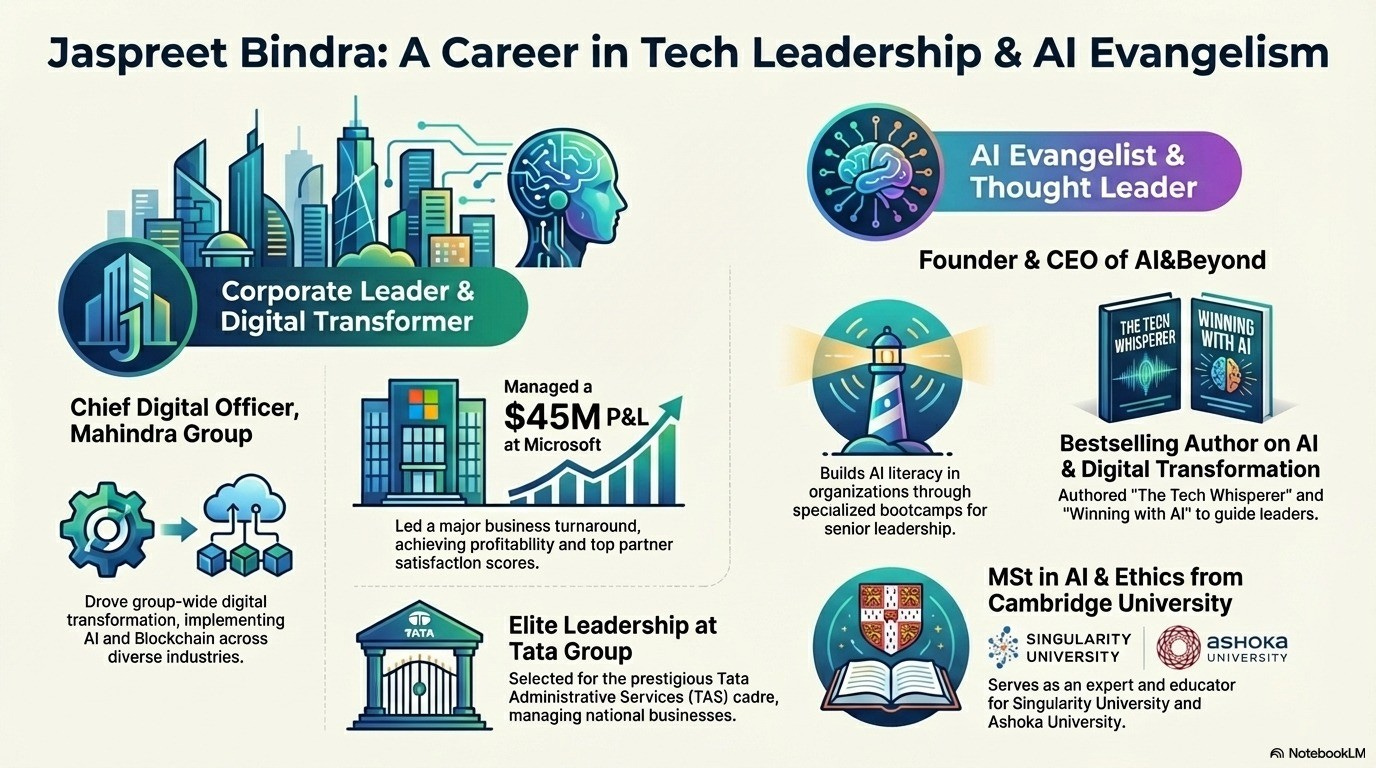
The 800 pound gorilla is so back, and it is pounding the others into the dust. The triumphal launch of Gemini 3, along with some eyepopping upgrades to NotebookLM and nanobanana, finally showed what Google was capable of in AI. Gemini 3tops the LMArena Leaderboard with a breakthrough score of 1501 Elo. It demonstrates PhD-level reasoning with top scores on Humanity’s Last Exam (37.5% without the usage of any tools) and GPQA Diamond (91.9%). It also sets a new standard for frontier models in mathematics, achieving a new state-of-the-art of 23.4% on MathArena Apex. Beyond text, Gemini 3 Pro redefines multimodal reasoning with 81% on MMMU-Pro and 87.6% on Video-MMMU. It also scores a state-of-the-art 72.1% on SimpleQA Verified, showing great progress on factual accuracy. If this is all LLM gobbledygook (or Googledygook, for that matter to you), it basically means that Gemini 3 has blown past every other model in multiple performance parameters. This also means Gemini 3 Pro is highly capable at solving complex problems across a vast array of topics like science and mathematics with a high degree of reliability. (see more here) NotebookLM, which I have always argued should be the hero product at Google, is now also powered by Gemini 3 and has some amazing new infographic and other capabilities; see what it did to my LinkedIn profile, for example!!
And, if that was not all, the world is going gaga over the stupendous capabilities of nanobanana, which seems to leave even the might Sora 2 in the dust (see more here). Well, I supposed Sam Altman is having some sleepless nights, even though he was gracious enough (along with Elon Musk) to post a congratulatory message to Google (see here). I have always maintained through numerous articles of mine is the Google is the ONLY full stack AI player out there, owning everything from chips to apps, along with the best datasets, and it is a matter of time that they get their act together (more here).
Well, the act is together.
The Google launch overshadowed even the bubble-defying results of NVIDIA, as it singlehandedly quashed the AI Bubble fears, at least for a day, before they tentatively emerged again. It just reported another blockbuster quarter. Revenue hit about $57 billion, up more than 60% from a year ago, and profit was roughly $32 billion, about two-thirds higher than last year. Its quarter-on-quarter (sequential) revenue growth of 22% in Q3 2026, increasing revenue from about $46.7 billion in Q2 to $57 billion in Q3. Most of the money comes from data centers, where big tech companies use Nvidia’s GPUs to run AI models. The company expects sales to climb further to around $65 billion next quarter, suggesting demand for its AI chips is still very strong.This is a stupendous growth from a company that large, and CEO Jensen Huang crowed about the fact that everyone is talking about an AI bubble, but they are seeing something else. The markets again displayed their nervousness the day later, reflecting in Nvidia stock plummeting again. Strange are the ways of the market, more driven by sentiment than by performance. Maybe, someone noticed that the aforementioned Gemini 3 was built entirely on Google’s own Tensor Processing Units (TPUs), not on Nvidia chips or rented infrastructure.
Meanwhile, causing perhaps further consternation to Altman, Nvidia teamed up with Microsoft and arch-rival Anthropic to launch their own alliance in the sea of alliances that the AI world is seeing, most of them largely stitched by OpenAI. They formed a strategic alliance worth up to $15 billion in investments—Nvidia up to $10 billion and Microsoft up to $5 billion. Anthropic will scale its Claude AI models on Microsoft Azure using Nvidia’s cutting-edge AI hardware, committing to spend $30 billion on Azure compute capacity. This collaboration includes co-designing AI model architectures and optimizing performance and efficiency together. Microsoft is also expanding Claude’s integration across its Copilot product family, ensuring wider enterprise access, while Nvidia and Anthropic collaborate on future GPU designs tailored to Anthropic’s workloads. (See more here). So, finally, Microsoft is diversifying decisively away from OpenAI. I believe this is a more natural fit for them, given that Anthropic is sharply focused on the enterprise customer, which is Microsoft’s sweet spot too.
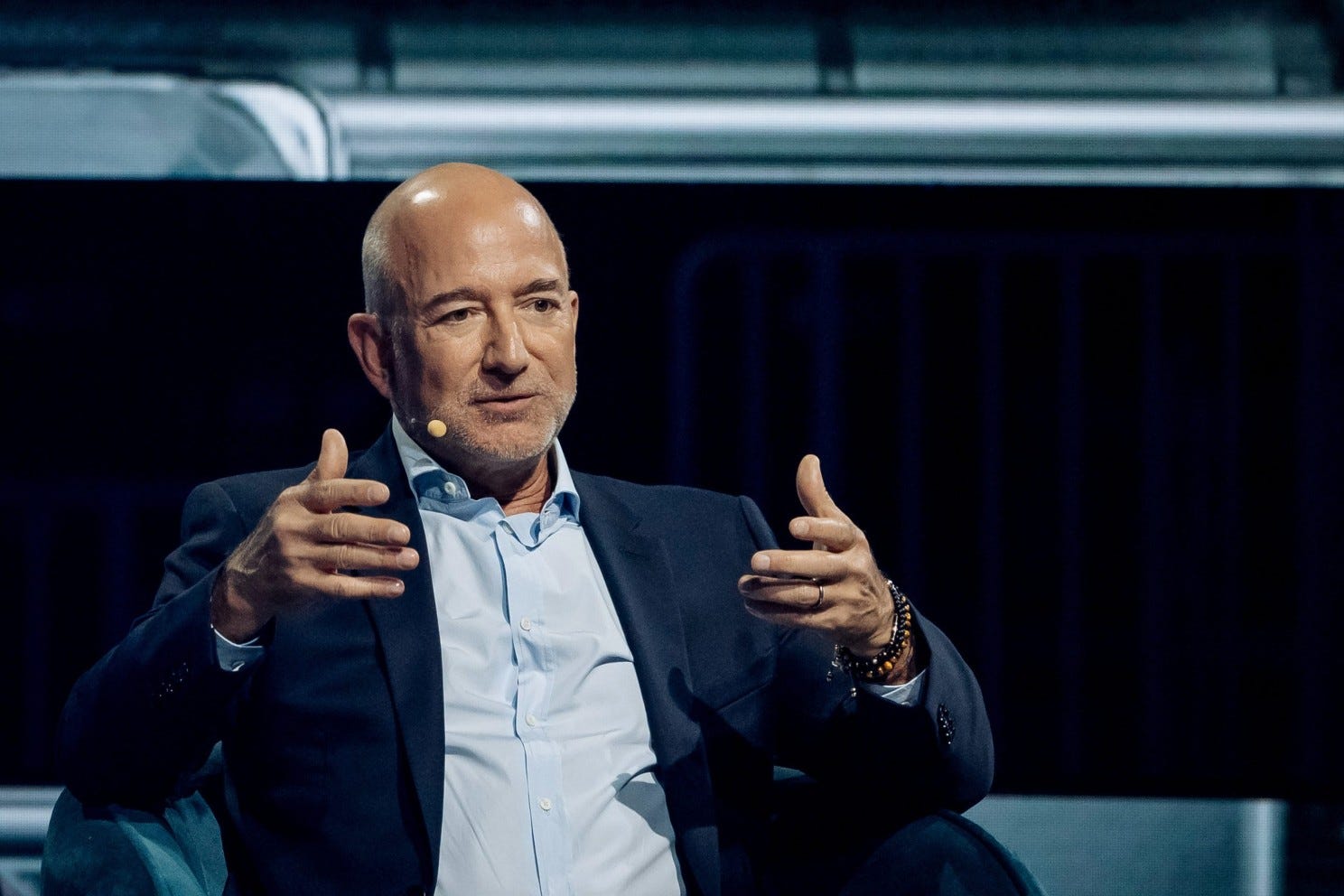
Bonus: the restless Jeff Bezos launched a new AI company, Prometheus, funded it with a measly $6.5bn and installed himself as the co-CEO. I guess he was missing all the AI action. (more here)
In this week’s AI Tool of the Week, we’re looking at a feature that changes how you navigate, explore, and stay aware on the road — without ever touching your phone.
It takes Google Maps beyond coordinates and distances, and turns it into something far more natural and context-aware.